What Colour Is Colloidal Silver—and What Can Its Colour Tell You?
One sample looks almost colourless, another pale yellow, and a third amber. Does the darker sample contain more silver or have better quality? Colour alone cannot reliably answer either question. Appearance is useful for noticing changes, but it is not a concentration test or a certificate of quality.
The manufacturer usually describes its Silionic silver dispersions as yellowish to amber. It also reports colourless, brownish and occasionally reddish appearances. Here is how to assess your own sample without reading too much into its shade.
Illustrative swatches, not photographs of samples. Silver content cannot be calculated from these colours.
Why can samples look different?
An electrolytically produced silver liquid may contain silver ions and finely dispersed silver particles. Particles can affect how light passes through, is absorbed by, or is scattered by the liquid. Lighting, liquid depth, vessel width and the background also affect the shade you see. Comparing an amber storage bottle with a clear laboratory beaker therefore tells you very little.
For its own Silionic range, the manufacturer observes that colour is often more pronounced at a higher declared silver input. That is not a universal conversion rule: liquids with a similar appearance can come from different processes, and two batches with the same labelled value may look different. Colour also cannot establish the proportion of ionic silver.
Colour, cloudiness and sediment are different observations
- Even tint: a liquid may be yellowish or amber while remaining visibly transparent.
- Cloudiness: the liquid looks hazy or milky. Record this separately from its tint.
- Visible flakes or sediment: check the water, vessel, electrodes and storage conditions before drawing conclusions.
A directed light may reveal a path through a dispersion because particles scatter light. Such a visual check does not measure ppm, particle size or purity.
How to compare two samples usefully
- Use the same viewing conditions: equally clean clear beakers, roughly equal liquid volumes, the same white background and the same lighting.
- Keep a batch record: production date, water source, generator model, running time, water volume, observed tint, cloudiness and sediment.
- Read the ppm statement carefully: a production-time figure may describe calculated silver released from the electrodes. It need not equal the amount later measured in the liquid.
- Investigate an unexpected change: first review the process and materials. A newly cloudy sample or one with unexplained sediment cannot be assessed confidently from a photo alone.
Example: you prepare two 200 ml batches using the same procedure. One looks pale yellow and the other almost colourless. Check your notes on water, time, vessels and electrodes; the difference does not prove that the first batch contains more silver or is better.
Water, electrodes and vessels: what you can control
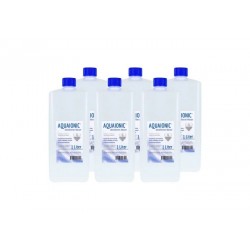
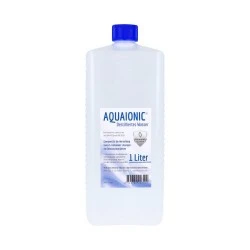
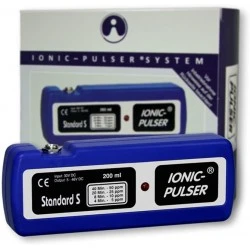
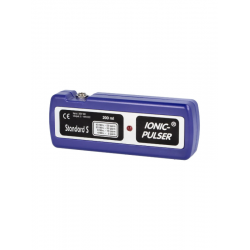
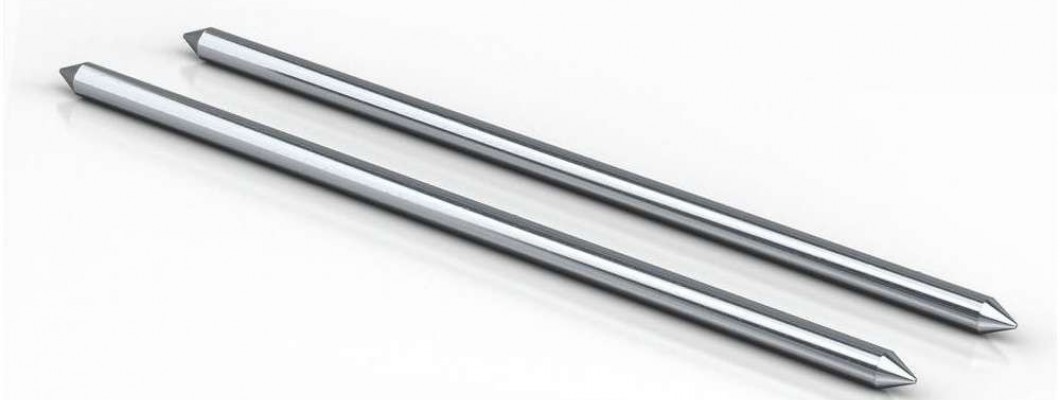
For a repeatable technical process, use water intended for colloid production, a clean glass beaker and suitable silver electrodes. EA lists conductivity of approximately 2 µS/cm at filling for Aquaionic 1 L. Its Ionic-Pulser Standard S uses silver electrodes of at least 99.99% purity. Those are facts about materials and equipment; neither guarantees a particular shade.
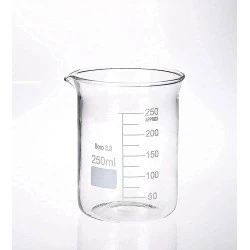
Do not add tap water, mineral water or salt to chase a stronger colour. Follow the generator instructions and clean the electrodes gently after use. A clear 250 ml laboratory beaker is useful for observing a small batch.
Storage: why amber glass changes what you see
An amber bottle helps reduce light exposure, but it is a poor window for comparing the liquid's actual tint. If you need to inspect a batch, pour a small portion into a clean, clear beaker. To avoid introducing contaminants, do not pour the inspected portion back into the main bottle.
EA also offers a 250 ml amber glass bottle. Label the preparation date and record storage conditions; interpret any sudden change alongside the full batch history.
What colour cannot confirm
Colour cannot confirm silver concentration, particle size, ionic fraction, purity or suitability for a particular use. A TDS conductivity meter also cannot measure all the silver in a mixture of ions and particles. If a numerical composition matters, use an appropriate laboratory analysis.
This article concerns the appearance and technical preparation of silver dispersions. It does not provide instructions for ingestion or medical use.
Frequently asked questions
Must good colloidal silver be colourless?
No. A colourless appearance alone does not establish quality; neither does a yellow or amber tint.
Does a darker colour mean a higher ppm value?
Not reliably. The manufacturer often sees stronger colouring at higher declared values within its Silionic range, but colour is not a measurement method.
Does a reddish tint automatically mean the batch has failed?
Tint alone cannot establish that. The manufacturer also mentions reddish appearances. Check for cloudiness and sediment, and review the water and batch history.
Can a flashlight measure concentration?
No. Seeing light scatter is not a numerical analysis of silver content.
Conclusion
Record colour; do not use it as a meter. An even yellow or amber tint is common in some silver dispersions, while a nearly colourless sample is not automatically poor. For a meaningful comparison, keep the lighting, vessel and preparation process consistent, and note cloudiness and sediment separately. When actual silver content matters, obtain a laboratory measurement.
For a controlled technical setup, see the Ionic-Pulser Standard S, Aquaionic water and 250 ml laboratory beaker.