Colloids – The Fascinating World of Microscopic Particles
At first glance, the term 'colloids' may sound complicated and strictly chemical. If you have searched for it online, scientific explanations involving terms such as suspended particles and dispersion may have seemed confusing. This article therefore introduces the subject in simpler language.
What are colloids?
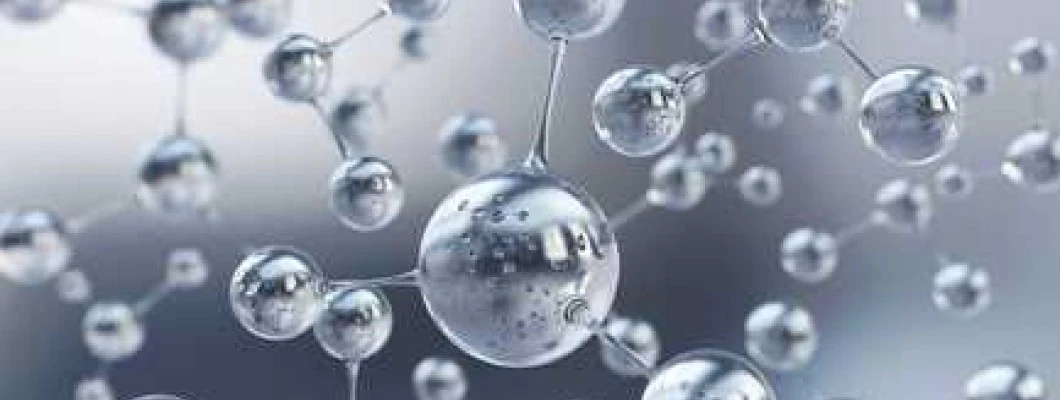
Colloids are tiny particles that are too small to be seen with the naked eye. Their diameter is usually between 1 and 1,000 nanometres. A nanometre is one billionth of a metre. These particles are dispersed in a liquid such as water, forming a mixture called a dispersion.
Milk is a familiar example of a colloid because it contains tiny fat droplets distributed in water. The article explains their stability in connection with Brownian motion.
Colloids are also present in the human body. Blood, for example, is described as a colloidal liquid because blood cells, haemoglobin pigment and other small particles are dispersed in plasma.
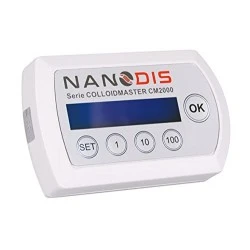
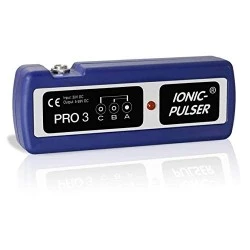
The colloids produced with generators are described as being based on the same general principle, but using particles of elements such as silver, gold or copper. The article stresses that quality depends not only on the generator but also on the water used.
What does ppm mean for colloids?
The abbreviation ppm means parts per million and is used to describe concentration. A value of 1 ppm means one part of a substance in one million parts of solution.
The article gives the example of colloidal silver at 25 ppm, described as 25 milligrams of silver per litre of water.
Why is ppm important?
The ppm value is described as an indicator of the concentration of particles in the liquid. A higher number means a higher concentration, but a higher concentration does not necessarily mean that a product is better; it only means that it is more concentrated.
How are colloids used?
The article describes colloids as elements in a very pure form. It also states that in the European Union their use for internal consumption is not permitted because they are not classified as food or dietary supplements.
It therefore recommends external use only and describes application to the skin as the suggested method in the original text.