Radon Measurement: Why It Is Essential for a Healthy Home and How It Works
Radon is one of the most underestimated yet dangerous factors affecting indoor air quality. Because it is colorless, odorless, and tasteless, it cannot be detected without proper measurement. Nevertheless, scientific research shows that radon is the second leading cause of lung cancer, immediately after smoking.
This raises a crucial question: how can we determine whether radon is present in our home, and why is radon measurement the first and most important step toward a safe living environment? In this article, you will learn what radon measurement is, how it is carried out, which methods are available, what the recommended limits are, and what to do if radon levels are too high.
What is radon measurement and why is it necessary?
Radon measurement means determining the concentration of radon gas in indoor air, expressed in becquerels per cubic meter (Bq/m³). Since radon cannot be detected by human senses, measurement is the only reliable way to assess the actual situation in a building.
Radon measurement is recommended:
- in houses and apartments,
- in basements and ground-floor rooms,
- in schools, kindergartens, and public buildings,
- after energy renovation of a building,
- before purchasing or renovating a property.
It is important to emphasize that radon is not a rare phenomenon. It is present in all buildings – the difference lies in its concentration.
How does radon enter indoor spaces?
Radon originates in the soil as a result of the radioactive decay of radium in the Earth’s crust. It enters buildings mainly:
- through cracks in foundations and floor slabs,
- through joints between walls and floors,
- through shafts, drains, and service penetrations,
- through porous construction materials.
The highest values are usually measured in basements and ground floors, but radon can also spread to higher levels, especially in airtight buildings with limited ventilation.
What types of radon measurements are available?
Long-term radon measurements (recommended)
Long-term measurements last at least 2 to 3 months and often up to one year. They are carried out using passive detectors placed in living spaces.
- provide the most realistic picture of average exposure,
- account for seasonal variations,
- recommended by experts and regulations.
Long-term measurements are the most reliable method for assessing health risks.
Short-term radon measurements (indicative)
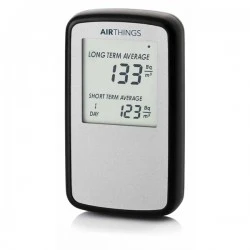
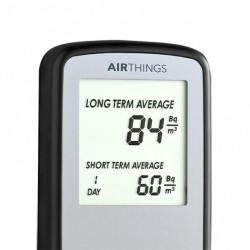
Short-term measurements last from several days to a few weeks and are performed using active electronic radon monitors. They are useful for quick checks, initial assessments, or verification after mitigation measures.
However, they do not replace long-term measurements, as they are more sensitive to temporary conditions such as weather and ventilation habits.
Where and how should radon measurements be carried out?
Correct detector placement is essential for reliable results:
- in rooms where occupants spend the most time (living room, bedroom),
- at least 1 meter above the floor,
- away from windows, doors, and heating sources,
- without changing normal ventilation habits.
Measurements are most commonly carried out during the heating season, when radon concentrations tend to be highest.
What are the recommended radon limit values?
According to European guidelines and national regulations, the reference level for residential buildings is 300 Bq/m³.
- lower values mean lower health risk,
- risk increases with longer exposure,
- even values below the limit are not completely risk-free.
What to do if measurements show elevated radon levels?
If radon concentrations exceed the recommended level, there is no reason for panic – effective and proven mitigation measures are available.
Improved and controlled ventilation
- regular ventilation of indoor spaces,
- use of automated systems that ensure continuous air exchange independent of occupant behavior.
Sealing of building elements
- sealing cracks in floors,
- sealing penetrations and shafts,
- improving the tightness of the floor slab.
Technical mitigation measures
- ventilation of subfloor spaces,
- active radon extraction systems.
In practice, the most effective solution is often a combination of several measures, tailored to the specific characteristics of the building.
Radon measurement and energy-efficient buildings
Radon-related issues often become apparent after energy renovation. New windows and improved insulation reduce heat loss, but they also reduce natural air exchange and may increase radon accumulation indoors.
This is why radon measurement is today a key element of a comprehensive approach to healthy, energy-efficient, and modern buildings.
Conclusion: radon measurement is the first step toward a safe home
Radon is invisible, but its impact on health can be severe. Because it cannot be detected without measurement, radon measurement is the only reliable way to determine whether a home is truly safe.
>>> With regular measurements, correct interpretation of results,
and appropriate mitigation measures, health risks can be significantly reduced.
>>> Radon measurement is not a cost – it is an
investment in long-term health.
If you want a safe and healthy living environment, let radon measurement be your first step.
Radon cannot be detected without measurement devices. Long-term measurements are the most reliable, as they account for seasonal variations and provide a realistic exposure assessment.