Radon in your home: how to measure, monitor and reduce it
Do you live in Slovenia's Karst region, Notranjska, Kočevje or another area known for elevated radon? Understanding the actual radon concentration inside your own home is particularly important.
Radon is invisible and odourless. Its concentration can change throughout the day, at night and between seasons. A single reading cannot tell the whole story.
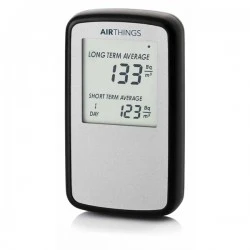
Airthings Corentium Home 244 is a standalone digital radon detector designed for continuous monitoring. It can remain in your home for months or years, collecting measurements and showing short-term and long-term averages.
This allows you to understand conditions in your home, observe changes and evaluate the effects of ventilation and other radon-reduction measures.
1. Why is radon monitoring important in Slovenia?
Several regions of Slovenia have geological conditions that increase the likelihood of radon entering buildings. Karst landscapes and other radon-prone areas are particularly relevant.
Areas with a higher probability of elevated radon
The Slovenian Radiation Protection Administration identifies several municipalities as areas with elevated radon potential, including:
- Karst and Primorska: Sežana, Divača, Komen, Hrpelje-Kozina and Miren-Kostanjevica.
- Notranjska: Cerknica, Postojna, Pivka, Logatec, Bloke, Loška dolina and Loški Potok.
- Kočevje and Ribnica: Kočevje, Ribnica and Sodražica.
- Other locations: Idrija, Ig, Vrhnika, Dobrepolje, Črnomelj, Semič, Žužemberk and other designated municipalities.
This does not mean every house in these areas has dangerous radon levels. It does mean that monitoring is especially worthwhile.
Documented measurements in Slovenian homes
A published Slovenian scientific case study investigated a residential house where radon concentrations ranged from approximately 500 to 12,000 Bq/m³ in different rooms. Following remediation, concentrations were reduced below 200 Bq/m³.
This was a documented research case, not a typical measurement for every home in the Karst region.
It demonstrates why actual measurements are essential before choosing a solution and why the results should be checked afterwards.
Source: Coping with radon problem in a private house, Building and Environment.
2. Why choose Airthings Corentium Home 244?
A practical instrument for continuous radon monitoring
- Continuous monitoring: keeps track of indoor radon concentration over extended periods.
- 24-hour average: shows recent changes and helps you observe the effect of ventilation.
- 7-day average: helps you compare radon conditions from one week to another.
- Long-term average: supports assessment of indoor radon conditions over weeks and months.
- Standalone operation: normal operation requires only the detector and batteries.
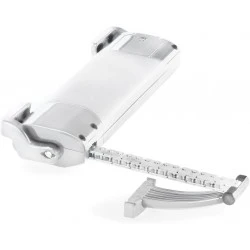
- Portable design: the same detector can be used to investigate different rooms in succession.
- No repeated laboratory analysis costs: the detector allows ongoing home monitoring without purchasing a new test for every reading.
Corentium Home measures radon using alpha-particle detection technology. Rather than providing only a one-time result, it allows users to follow how their indoor environment changes over time.
3. How to start measuring: five simple steps
Step 1 – Activate your detector
Remove the battery protection tab or prepare the three AAA batteries as instructed by the manufacturer.
The detector performs its initial self-test and calibration. The screen may display CAL followed by flashing dashes.
Step 2 – Choose the right room
Start in the lowest regularly occupied living area where you spend significant time.
A ground-floor living room, bedroom or finished basement may be appropriate.
Place the detector on a stable surface at least approximately 50 cm above the floor and about 150 cm away from doors, windows and ventilation openings. Avoid direct sunlight and moisture.
Step 3 – Allow initial data collection
The first reading normally becomes available within approximately 6–24 hours. Early results are preliminary because the device is still building its measurement history.
Step 4 – Follow the readings
After one day, observe the 24-hour average. After seven days, a seven-day average also becomes available. Allow at least 30 days to develop a more useful long-term picture, ideally continuing for several months.
Step 5 – Record your results
Once a week, note the date, measurement duration, seven-day and long-term averages, together with any important changes in ventilation.
This creates a useful history of your indoor radon conditions.
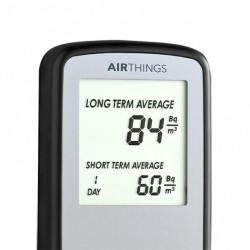
4. Understanding the readings on the display
| Display | Meaning | Practical use |
|---|---|---|
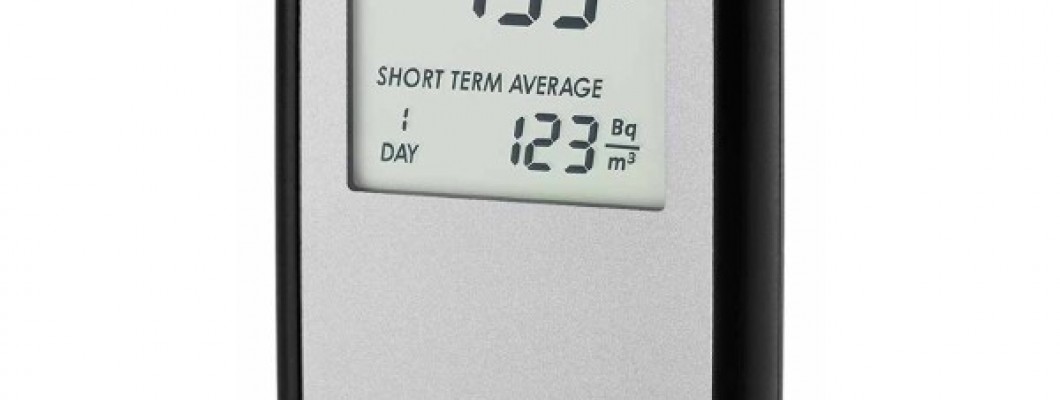
| 1 DAY | Average over the past 24 hours | Observe recent changes, including the effect of ventilation. |
| 7 DAYS | Average over the past seven days | Compare weeks with different ventilation patterns. |
| LONG TERM | Average since the current measurement started | Track longer-term indoor radon conditions. |
Practical tip: Use the long-term average to understand your baseline conditions. When introducing ventilation changes, focus on the 24-hour and seven-day averages because the long-term average changes more slowly.
5. What does 300 Bq/m³ mean?
Slovenia has established a reference level of 300 Bq/m³ for annual average indoor radon concentration.
Health risk increases with higher concentrations and longer exposure. Reducing radon is worthwhile even while a formal long-term assessment is being arranged.
How should you respond to your readings?
Lower and stable readings: continue monitoring to understand seasonal variation.
Noticeably elevated readings: review ventilation conditions and follow the results over a longer period.
Persistently elevated readings or a long-term average above 300 Bq/m³: arrange appropriate confirmatory testing and consider mitigation measures.
Very high readings: seek professional advice promptly rather than waiting several months without taking action.
A consumer digital detector is valuable for home monitoring. Formal measurements required under Slovenian regulations must follow the applicable official methodology.
6. How can ventilation reduce indoor radon?
Increasing the exchange of indoor and outdoor air is one of the simplest measures that can initially be considered.
A useful approach is cross ventilation: opening windows on different, preferably opposite sides of a building to encourage airflow through a room or a series of connected rooms.
How to perform cross ventilation
- Select two suitable windows on opposite sides of the home or living area.
- Open both windows to encourage air exchange.
- Open internal doors where appropriate to allow airflow through connected spaces.
- Ventilate and observe changes in the 24-hour average over the following hours.
- Repeat under similar conditions and compare seven-day averages over time.
The result depends on weather, wind, window openings, the layout of the building and how radon enters from the ground.
Important: Radon concentration may rise again after windows are closed. Ventilation is not necessarily a permanent solution, particularly in buildings with substantial radon entry from the soil.
7. COMUNELLO SMART20 + AF820: convenient ventilation without major construction
If you want more regular ventilation without manually opening windows several times a day, consider COMUNELLO SMART20 with the AF820 Wi-Fi controller.
SMART20 is a chain actuator designed to open and close compatible windows. AF820 provides control through the OneSmart app, including scheduled operation.
Why is this an attractive first step?
- Use existing windows: many suitable installations do not require new wall openings or major construction work.
- Scheduled ventilation: windows can be opened according to a planned daily routine.
- Remote control: the app allows users to operate compatible windows remotely.
- Two-actuator configuration: two appropriately installed chain actuators can support motorised cross ventilation through two windows.
- Measurable results: Airthings Corentium Home allows you to monitor the effect of more regular ventilation on daily and weekly radon averages.
Two openings for cross ventilation
For motorised cross ventilation, plan for two suitable SMART20 actuators, one for each window, with appropriately configured controls.
The EA Elektronika SMART20 + AF820 kit contains one chain actuator and one Wi-Fi control module. A two-window configuration therefore requires an appropriately expanded setup.
Installation can be relatively straightforward and may avoid major construction, provided the existing windows are compatible and suitable electrical power is available. Mechanical fitting and electrical connections must follow the manufacturer's instructions; 230 V wiring should be handled by a qualified person.
This makes motorised window ventilation a useful, less invasive initial measure for exploring whether increased air exchange helps lower radon concentration in your home.
8. Practical example: measuring the effect of two window actuators
Example: a house in Slovenia's Karst region
Imagine a house near Cerknica or Sežana. The homeowner places Airthings Corentium Home in the living room and measures continuously for 30 days.
The detector shows a long-term average of 480 Bq/m³.
This is an illustrative example, not a real measurement from an identified home.
Phase 1 – Establish baseline conditions
The homeowner records 24-hour, seven-day and long-term averages and notes the usual ventilation routine.
Phase 2 – Introduce regular cross ventilation
Two compatible windows on different sides of the building are fitted with suitable motorised opening equipment. A regular ventilation schedule is configured.
Phase 3 – Monitor changes
The Airthings detector remains in its original position. The homeowner compares 24-hour and seven-day averages before and after introducing the new ventilation routine.
Phase 4 – Evaluate the results
If the readings decrease, they provide useful evidence that the ventilation routine is helping under the observed conditions.
If readings remain high or increase rapidly again after window closure, additional assessment and more permanent mitigation measures may be needed.
Remember: the 1 DAY figure represents the previous 24 hours. It does not show the instantaneous concentration immediately after a window opens. Compare multiple readings under reasonably similar conditions.
9. Keep a simple radon monitoring log
You can create a useful monitoring history with a simple table updated daily or several times per week.
| Day | 1 DAY | 7 DAYS | Event |
|---|---|---|---|
| 1 | – | – | Monitoring begins |
| 7 | 420 | 460 | Usual ventilation routine |
| 14 | 310 | 390 | New ventilation schedule begins |
| 21 | 210 | 260 | Regular cross ventilation |
Note: all numerical values in the example table are hypothetical Bq/m³ readings. They do not represent guaranteed performance or measured results from a COMUNELLO installation.
Long-term monitoring is particularly valuable because it allows you to identify seasonal changes and observe conditions after ventilation improvements or other remediation measures.
10. When is ventilation not enough?
In some buildings, radon enters continuously through ground-floor structures, construction joints, cracks and other pathways.
Ventilation may temporarily reduce concentration, but more lasting results can require professionally designed radon mitigation, such as sub-slab depressurisation or extraction of radon-containing soil gas.
Corentium Home remains useful after professional mitigation because you can continue monitoring the indoor environment over time.
11. Frequently asked questions
Is Corentium Home suitable for houses in Slovenia's Karst region?
Yes. Continuous home monitoring is particularly worthwhile in regions with elevated radon potential. The relevant factor is the actual concentration inside each individual building.
Can I use it to check the effect of ventilation?
Yes. Observe changes in the 24-hour and seven-day averages and compare readings under reasonably similar conditions.
How long should I measure?
Initial readings normally appear within approximately one day. Monitor for at least 30 days for a more useful long-term indication, ideally continuing for several months.
Can I check several rooms?
Yes. Record your previous results and press RESET before starting a new measurement in another room. Multiple detectors are required for simultaneous measurements.
Can two SMART20 window actuators reduce radon?
Two appropriately installed actuators can support regular cross ventilation, which may reduce indoor radon concentrations. Results vary and should be verified through measurement.
Does Airthings automatically control COMUNELLO actuators?
The approach described here uses Airthings for independent monitoring and COMUNELLO for separately configured ventilation. It is not a verified radon-triggered automatic window control system.
Should I keep measuring after radon levels decrease?
Yes. Radon may vary with weather, seasonal conditions and building use. Continued monitoring can help identify changes.
Measure radon. Improve ventilation. Check the results.
Airthings Corentium Home 244 provides continuous radon monitoring and allows you to compare conditions over time.
COMUNELLO SMART20 + AF820 makes regular window ventilation easier. A suitable two-actuator setup can support cross ventilation as an initial measure to improve air exchange.
Airthings Corentium Home →COMUNELLO Smart Ventilation →Conclusion: monitor, understand and improve your indoor environment
Radon can be an important issue in individual homes, especially in areas with geological conditions associated with increased radon potential.
Airthings Corentium Home 244 gives homeowners a practical way to monitor actual radon concentrations instead of relying on assumptions.
Start by measuring, learn how your radon levels change over time and evaluate the effect of more regular ventilation. Where appropriate, two motorised COMUNELLO window actuators can be a convenient first step without major construction work.
If concentrations remain high, the measurement history can help you make informed decisions about further professional assessment and mitigation.