Found Mouse or Rat Droppings? A Safe Cleanup and Control Plan for the First 24 Hours
You open a cellar, pantry, garage or holiday home and find droppings beside a wall, damaged packaging or nesting material. The instinctive response is often to reach for a broom or vacuum cleaner. Dry sweeping and vacuuming, however, can lift contaminated particles into the air.
The correct sequence is ventilation, wet disinfection, safe removal, inspection of rodent routes, then trapping or repelling and sealing entry points. No single device replaces sanitation, food control and physical exclusion.
First: what not to do
- Do not dry-sweep droppings, urine contamination or nesting material.
- Do not vacuum the contaminated area with an ordinary vacuum cleaner.
- Do not use compressed air or high-pressure water that could disperse contamination.
- Do not touch droppings or a dead rodent with bare hands.
- Do not begin moving dusty boxes before ventilating and inspecting the room.
- Do not empty or clean an electronic trap while it is switched on or connected to its charger.
Slovenia’s National Institute of Public Health, NIJZ, explains that the viruses responsible for haemorrhagic fever with renal syndrome can spread when contaminated particles from rodent excretions are inhaled. Puumala and Dobrava viruses are the principal causes recorded in Slovenia. If you become unwell after exposure, tell your healthcare provider that you cleaned a rodent-contaminated area.
Why does a safe procedure matter?
NIJZ data published on 29 September 2026 recorded 15 laboratory-confirmed cases of haemorrhagic fever with renal syndrome in Slovenia through epidemiological week 39 of 2026. Cases were recorded in several statistical regions.
This does not mean that every dropping contains a disease-causing organism. It does mean that unidentified rodent contamination should be handled cautiously. Rodents are associated with other risks as well: NIJZ identifies rats and field mice as important reservoirs of leptospires, which can contaminate water or soil through urine.
The health information supports safe working practices. It is not included to diagnose disease or cause unnecessary alarm.
The first 30 minutes: restrict access and ventilate
- Restrict access. Keep children, pets and anyone not involved in the cleanup away from the room.
- Do not create airflow toward occupied rooms. Open exterior doors and windows while keeping doors to the living area closed.
- Ventilate for at least 30 minutes. NIJZ advises leaving the room while it is being aired.
- Prepare the equipment. You need gloves, paper towels, bags, a suitable disinfectant and wet-cleaning equipment.
- Do not proceed with heavy contamination without assessing the risk. Large quantities of droppings, several nests, contaminated ventilation or numerous dead rodents justify professional assistance.
Preparing and using disinfectant
NIJZ describes a solution made from one part chlorine disinfectant, such as suitable household bleach, and nine parts water. This is a 1:9 ratio. When using a ready-made disinfectant, follow its label.
50ml of suitable chlorine disinfectant plus 450ml of water. This example applies only if the product is suitable for the NIJZ procedure. Always check its concentration and label.
The contamination must be fully wetted. NIJZ specifies at least five minutes; observe a longer period when required by the disinfectant manufacturer.
Warning: never mix chlorine products with ammonia, acids, vinegar or other cleaners. Maintain ventilation and confirm that the disinfectant is compatible with the material being treated.
A safe procedure for removing droppings
- Put on gloves. Use intact rubber, latex or plastic gloves.
- Thoroughly wet the droppings and surrounding area. Do not spray with enough force to scatter material.
- Wait at least five minutes or the contact time stated by the disinfectant manufacturer.
- Wipe up with paper towels. Place used towels and waste directly into a prepared bag.
- Disinfect the wider surface. Clean floors, shelves, edges, drawers and other potentially contaminated objects.
- Continue with wet cleaning. The objective is to avoid raising dust again.
- Remove the gloves safely and wash your hands thoroughly with soap and water.
It is often safer to dispose of contaminated cardboard boxes. Plastic, glass and metal containers can generally be wet-disinfected when the material tolerates the product. Discard food when its packaging is visibly damaged or contaminated.
Was it a single visitor or is the infestation active?
| Observation | What it may indicate | Next step |
|---|---|---|
| A few old-looking droppings with no new signs | Past activity is possible, but appearance alone does not confirm that the room is now clear. | Clean safely, remove food and monitor the area over the following days. |
| Fresh droppings appear after cleanup | Activity is probably continuing. | Position a trap on the travel route, inspect entry points and keep a monitoring record. |
| Torn food packaging, gnawing or nesting material | The rodent has access to food or shelter. | Remove the food source, reduce clutter, use sealed containers and begin active trapping. |
| Movement inside a wall or ceiling | The route may pass through the structure, insulation or a service void. | Do not seal the opening without investigating; an animal could be trapped inside. |
| Several rodents, daytime sightings or numerous nests | A heavier infestation or abundant food and shelter. | Use a professional pest-control service and conduct a complete building inspection. |
Dropping shape and size can provide clues, but they are not sufficient for reliable species identification. If the distinction affects treatment, use photographs, a monitoring camera or professional identification.
Trap or ultrasonic repeller?
The answer depends on whether you need to remove a rodent that is already present or primarily reduce the risk of another entry.
A trap is appropriate when fresh droppings continue to appear, movement is heard or new damage is found. It also provides direct confirmation of a catch.
An ultrasonic repeller can complement physical exclusion and food control. It does not clean contamination, seal gaps or confirm the removal of an animal already inside.
A serious problem usually requires an integrated approach: cleanup, food removal, active trapping, route inspection, physical exclusion and monitoring. A repeller is an additional measure rather than a replacement for every other step.
RATMAN M8: controlled trapping without poison

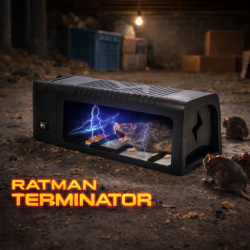
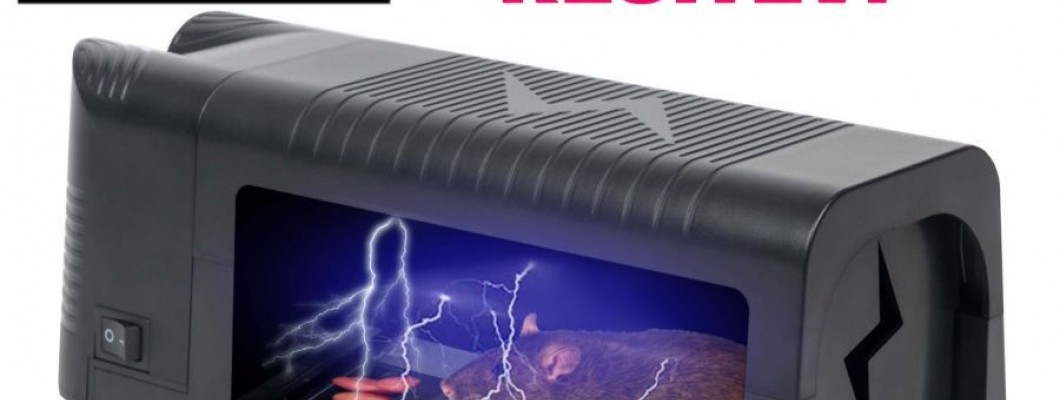
RATMAN M8 TERMINATOR is an enclosed electronic trap for mice and rats. EA describes it as a rechargeable high-voltage trap without poison or glue, with status LEDs and a low-contact emptying design.
The product page lists a replaceable rechargeable 18650 cell, an included charger with 5V DC output and approximate dimensions of 22 × 15 × 11cm. The stated 20–30 catches per charge is a marketed estimate; actual results depend on battery condition, rodent size and operating conditions.
Placement determines the result
- Position the trap beside a wall or edge where droppings, rub marks or damaged packaging were found.
- Align its entrance with the expected travel route.
- Use only a small amount of bait; excessive bait can allow feeding without correct entry.
- Remove competing food, particularly pet food left out overnight, crumbs and unsecured waste.
- Check the trap daily and follow the status-light information in its supplied instructions.
- Keep it inaccessible to children and pets, and never touch the internal metal plates.
- Switch it off before emptying or cleaning and follow the product instructions.
RATMAN PRO: supplementary room protection
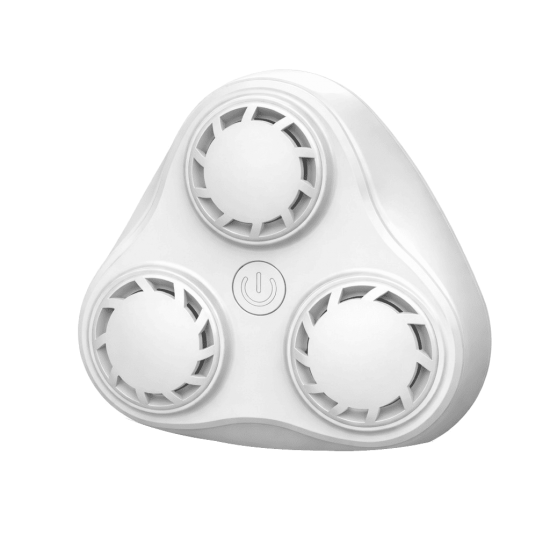
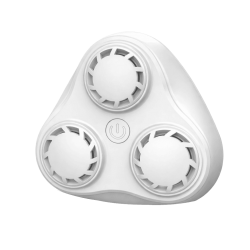
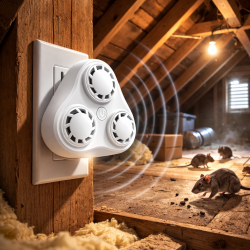
RATMAN PRO is a plug-in ultrasonic repeller with three speakers and frequency variation. EA lists coverage of up to approximately 250m² in open areas and first visible results in approximately two to four weeks.
“Open area” is an important limitation. Walls, closed doors, cupboards, shelving and other obstacles can create acoustic shadows. The quoted area should not automatically be applied to several separate rooms or storeys.
- Use an unobstructed wall socket rather than hiding the unit behind a large cupboard.
- For continued operation, leave it running as specified by the manufacturer.
- Do not use it in an area containing pet rodents such as hamsters, guinea pigs or chinchillas.
- If fresh droppings still appear, combine it with active monitoring or trapping.
- Ultrasound does not pass through solid walls like an electrical signal; separate rooms may require separate treatment.
Seal gaps only after identifying the route
Inspect the areas around pipes, cables, doors, ventilation openings, floor channels and construction joints. Look for worn edges, greasy marks, fur, damaged insulation and fresh gnawing.
Do not seal a suspected opening without thought if an animal may still be inside a wall or ceiling. Begin with monitoring and trapping or consult a professional. A lasting repair requires a construction-appropriate material that rodents cannot easily gnaw through; soft expanding foam alone is often insufficient.
Also remove the reason for entry: open food bags, pet food, seed, dirty bins, dripping water, cardboard piles and densely stored items along walls.
A practical 24-hour plan
| Time | Action | Objective |
|---|---|---|
| 0–30 minutes | Restrict access, open exterior windows and doors, and leave the room. | Ventilation without unnecessary exposure. |
| 30–90 minutes | Wet-disinfect the droppings, wait for the stated contact time, remove waste and wet-clean the surfaces. | Remove contamination without raising dust. |
| 1–3 hours | Photograph signs and inspect food, cables, wall edges and possible entry points. | Determine the route and likely scale of the problem. |
| The same evening | Remove accessible food and position a trap on the active route. Use a repeller as a supplementary measure. | Begin active control while making the space less attractive. |
| The following morning | Check the trap, new contamination and any displaced materials. | Confirm whether activity is continuing. |
When should you call a professional?
- There are extensive droppings, several nests or numerous dead rodents.
- Ventilation ducts, insulation or inaccessible construction spaces are contaminated.
- The premises are a school, kindergarten, food business, restaurant, food warehouse or healthcare facility.
- New droppings continue to appear every day despite several days of correct control measures.
- Rats are seen during the day, several animals are present or important electrical wiring is damaged.
- You cannot clean the area safely or reliably identify the entry route.
A problem on public property, inside a shared drainage system or in an apartment building may extend beyond one room. Notify the property manager, owner or responsible municipal service.
Frequently asked questions
Can I vacuum droppings with a HEPA-filter vacuum?
For ordinary household cleanup, NIJZ and CDC advise against vacuuming droppings before disinfection. They should first be thoroughly wetted, disinfected and removed by a wet method.
Must I discard everything in the room?
No. The decision depends on the material and contamination. Hard, nonporous surfaces can generally be disinfected. Heavily contaminated cardboard, insulation and other porous material may be safer to discard.
Do fresh-looking droppings prove that a rodent is still present?
They increase the likelihood of continuing activity but are not conclusive by appearance alone. Monitor for new signs after cleaning and position the trap correctly.
Does RATMAN PRO replace a trap?
Not in every situation. A repeller is primarily a supplementary and preventive measure. When active presence is confirmed, a trap provides direct control and confirmation of a catch.
Can I use RATMAN PRO if I keep a hamster?
Not in the same area. The manufacturer warns that ultrasound also affects pet rodents.
When should I seek medical advice?
If you become unwell after exposure to rodents or their excretions, consult a healthcare professional and explicitly mention the exposure. This article does not diagnose illness.
Clean safely first, then remove the cause
For active trapping without poison, review the RATMAN M8 TERMINATOR. For supplementary long-term protection of an open space, review RATMAN PRO.
The best result comes from combining safe cleanup, food control, correct trap placement, monitoring and physical exclusion.
Sources and verification date
- NIJZ: Weekly HFRS monitoring, data through 27 September 2026, published 29 September 2026.
- NIJZ: Haemorrhagic fever with renal syndrome, updated 4 May 2026.
- NIJZ: Leptospirosis.
- CDC: How to Clean Up After Rodents, 8 April 2024.
- City of Ljubljana: rat control and food-source prevention.
- Device specifications were checked against the current EA ELEKTRONIKA product pages.
Sources and links checked on 2 October 2026. Current public-health guidance and the instructions supplied with each product always take priority.